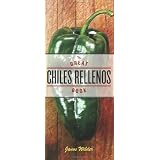
Average Reviews:

(More customer reviews)Janos Wilder asserts that:
"Chiles rellenos, like most Mexican foods, are of the people. Recipes are handed down from generation to generation, and like all great dishes, everyone has an opinion about them - the best ways to make them, whose mother makes them best, or where to get the best one."
He teaches a specific approach to creating all Mexican dishes. Take for example a simple dish of beans and/or rice, an enchilada and salsa. Salsa is "the high note that opens your palate and titillates your senses. The beans or rice are typically not made to be spicy hot but are used to put out any fire caused by the salsa. The enchilada contains the primary flavors of the dish and will have flavor profiles that, in terms of heat, will range between the salsa and the rice and beans. While this is a simplistic example, the pattern holds throughout the region."
He starts with three types of chiles: Anaheim, the mildest except in the fall; poblano, a little spicier with deeper flavors and the largest; and jalapeño , smallest and hottest, which make great "poppers".
A friend in Albuquerque warns, however, that outside New Mexico "Chile nomenclature is a total mess. The Anaheim is the mildest of the green chiles and is a cousin of the New Mexican chile. Ancho is a fairly large chile, 2 inches wide, 3 inches long. Known as ancho in both fresh and dried forms, it is called poblano (when green) probably because it came from the Puebla Valley near Mexico City. In some areas it's known as pasilla, even though the true pasilla chile is totally different: ancho, 5 inches long, tapering from 3-inch shoulders; true pasilla, 4-3/4 to 10 inches long, narrow (3/4 inch wide), curved and a dark brownish black. The name pasilla means "little raisin," which refers to raisiny appearance and aroma. It's mild."
All that comes into play if you live outside of New Mexico: in New Jersey, the poblano is almost invariably sold as a green Hatch chile. But, "Hatch isn't the name of a chile variety, it's the name of a place. Chiles are grown in Hatch, New Mexico, but they aren't any better than chiles from neighboring towns. And there is no way tiny Hatch produces all the chiles that get sold under that name. Farmers from other parts of New Mexico and other states including Arizona ship green chiles to Hatch to be resold. Some Hatch chile producers are reportedly shipping seeds to Mexico and having the chiles grown south of the border, where water and labor are cheaper."
Janos makes the point that different methods of roasting chiles will lead to different flavors and mouth feels. For many cooks, freezing roasted chiles (or buying roasted frozen chiles) is the most practical approach. Here's a friend's approach: "I think it's best to skin, de-seed and get rid of the stem before freezing. It reduces the volume considerably and makes it easier to use. Some people freeze with the skins on (they slip off easily when thawed), but it's more of a hassle to use. I freeze chile in one-gallon freezer bags and stack them on the freezer shelf. Then I hack off what I need." Fresh or frozen, if you are up to the task, Janos has a wonderful tutorial on the various techniques of roasting chiles.
It's when we get to the fillings, however, that Janos really shines. The chile relleno, literally "stuffed chile", is often stuffed with a melting cheese, such as queso Chihuahua or queso Oaxaca meat made of diced pork, raisins, and nuts, seasoned with canella and covered in an egg batter or flour. It is often served in a tomato sauce but the sauces vary widely. Some of the innovative combinations Janos suggests are Holiday Apple and Walnut, Wild Mushroom and Madiera, Ham, Almonds and Goat Cheese,and dozens of others.
Janos has come up with a wide variety of combinations, inspired by his general approach to Mexican food. The index here on Amazon will give a clear understanding of how he varies his fillings.
Janos writes: "Making renellos is a blast and a great communal effort. So invite some friends over, make some limonada or a pitcher of margaritas, or crack open an icy beer, and let everyone get in on the action - from roasting the chiles to deciding what you're going to stuff into them, from soaking the beans to making them into silky refritos - enjoy the process and savor the results. Most important, have fun!"
A vegetarian friend describes how well this approach works: "You can also do a variation of stuffed peppers and chile rellenos; skin and stuff the chiles with dead animal for the rest of the gang, cheese and rice for the nominal vegetarian. Then lay them as is in a baking dish, smother in some appropriate sauce (I like something mole-ish), then bake. Sprinkle with queso seco and chopped epazote." Both versions were delicious!
This book is great fun to read, as is his Janos: Recipes and Tales from a Southwest Restaurant, and Janos greatly improved my understanding of how to make delicious Mexican foods, not only renellos, but any Mexican dish, using his specific approach to the three basic elements. I found The Complete Chile Pepper Book: A Gardener's Guide to Choosing, Growing, Preserving, and Cooking an excellent complement to Janos's volume.
Robert C. Ross 2009
Click Here to see more reviews about: The Great Chiles Rellenos Book
James Beard award-winning chef Janos Wilder offers more than 30 recipes for delicious chiles rellenos, ranging in complexity to suit beginning and expert home cooks alike. Wilder introduces regional Mexican rellenos, then provides contemporary interpretations, including jalape?±o poppers, roasted poblanos, sauces, and more. From choosing the right chiles to preparing them for stuffing, THE GREAT CHILES RELLENOS BOOK provides plenty of inspiration for anyone craving a taste of the Southwest. The only complete chile relleno cookbook, including 30 traditional Mexican recipes and modern variations from the Southwest and beyond.Includes recipes for batters and crusts, salsas and sauces, and salads and relishes. Reviews"Janos Wilder has written an entire book on the subject that offers so many different variations on chiles rellenos that you could literally make a different one for more that a month."-New York Daily News
 Get 32% OFF
Click here for more information about The Great Chiles Rellenos Book

0 comments:
Post a Comment