Average Reviews:

(More customer reviews)The word 'Chicano' is used for an American of Mexican extraction, particularly one living in border areas of New Mexico etc. The word 'Chicano' denotes someone who, despite living in U.S.A. is pure Mexican (and thus is not to be confused with a 'pocho', a term which Chicanos apply to one of their own people who has become too Americanised or 'agringado' (i.e. like a 'gringo' or 'gavacho' - as the American is sometimes called). The chicanos have an extremely rich culture and this excellent reference work is a great tribute to that culture written by an expert. This dictionary is supplemented with a forty page bibliography as well as an index. The entries range from the 'abuelo' (literally 'grandfather' but the term is also used as a synonym with 'coco' which is a kind of bogeyman) to 'Zozobra' (a giant effigy which is burnt). By coincidence the last entry has an indirect relation to the first entry since there is a cross reference to the 'kookooee' which is another form of this effigy (burnt in Santa Fe) and the name of which is derived from the 'cucui' or 'coco' (which , as we have just mentioned, are synonymous with the 'abuelo'). In fact, talkng of the burning of effigies, I also read on p. 222 that at Easter (as in Mexico - and indeed even in many parts of Greece) a life-size effigy of Judas is burnt.
The author is careful to provide the correct Chicano Spanish term for all the traditions and customs mentioned. The work covers all aspects of folklore. There are rites of passage: baptism customs and rituals (found in the entry on the 'comadre'/'compadre'), the 'quinceanera'( - spelt with a tilde on the 'n' - this refers to a girl's fifteenth birthday celebration), wedding customs and death customs (e.g. in the entries 'camposanto' or cemetery, 'calavera' or skeleton, the 'Dia de la Muerte' or Day of the Dead and 'la carreta de la muerte' or death cart). There are also entries which feature mythological creatures in folk tales like the 'chanes' or water spirits, the 'duendes' or goblins (distinct from the 'pichilingis' or elves) and the 'chirrionera' or mythical snake.
There are many entries which pertain to 'fiestas' and calendar customs. For instance, in connection with the Christmas season there are entries on 'aguinaldos' or carols, 'farolitos' or lanterns, 'matachines','oremos' and the 'pinata'(spelt with a tilde - the clay pot that children break to get the presents and sweets/candies inside). There are also legends such as 'La Llorona' and even some Aztec myths like Aztlan, Quetzalcoatl and Tanantzin etc. The dictionary also contains a few short biographies of notable persons such as La Adelita (feminist symbol) and the pioneering folklorist Fabiola Cabeza de Baca.
Food is also represented with entries like the 'burritos'(little donkeys) and 'capirotada', etc. There is a reference to 'curanderismo' or folk healing as well as to the 'huesero' ot bone-setter. Similarly, some words deal with magic and superstition such as 'brujeria' or witchcraft and the 'mal ojo' or evil eye. The reader can also find entries on chicano folk art such as the 'colcha' or blanket and the 'retablos' or religious paintings. Musical entries are also provided (e.g. the 'conjunto' groups and the 'mariachi' bands). Unique literary terms are also included like 'adivinanzas' or riddles, 'decimas' or poetic narratives and one can also find terms that relate to political and social aspects of chicano culture. For instance, there is mention of the 'rascuache' or downtrodden folk, the 'pachucos' (urban youth of the 1940s) and even the 'alambrista' or illegal border-crosser.
There are so many other fascinating entries which cannot all be mentioned here. This is an important work and an invaluable record of the Chicanos' cultural wealth. It is an essential reference tool for Mexicans on both sides of the border and for general readers who enjoy reading comparative folklore.
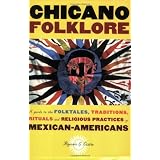
N.B. THIS BOOK (ENTITLED 'DICTIONARY OF CHICANO FOLKLORE')IS EXACTLY THE SAME BOOK AS ANOTHER ENTITLED 'CHICANO FOLKLORE: GUIDE TO TRADITIONS, RITUALS AND RELIGIOUS PRACTICES OF MEXICAN AMERICANS' (BY A DIFFERENT PUBLISHING HOUSE). THE FORMER IS THE ORIGINAL HARDBACK EDITION AND THE EXTRA PAGES (333 AS OPPOSED TO 308) IS DUE TO THE FACT THAT IT IS ILLUSTRATED WITH DOZENS OF BLACK AND WHITE PHOTOGRAPHS. THE LATTER TITLE IS SIMPLY A MUCH MORE ECONOMICAL PAPERBACK VERSION OF THE SAME WORK.
Click Here to see more reviews about: Chicano Folklore: A Guide to the Folktales, Traditions, Rituals and Religious Practices of Mexican Americans
 Get 28% OFF

0 comments:
Post a Comment